Toscana Produzione Musica

Next Stage explores how immersive digital technology can create meaningful and satisfying live concert experiences for audiences when artists are not physically present in the same location. 

The pilot investigates how XR, immersive video, spatial audio, live streaming and real-time interaction can preserve presence, collective experience and the relationship between performers and audiences, while enabling artistic possibilities that do not exist in a traditional concert. 

Rather than attempting to replace physical live music, Next Stage is developing an alternative live format in which distance becomes a creative opportunity rather than simply a limitation. 

Pilot leader

Toscana Produzione Musica

Location

Italy

Website

Technology tested

AMPLIFY IMMERSIVE

Next Stage uses AMPLIFY IMMERSIVE to explore new ways of connecting remote performers and audiences through live immersive media.

The pilot combines 360° video, live streaming, spatial audio, XR headsets, and interactive interfaces, while exploring how augmented 3D elements can enhance the artistic experience.

Ultimately, the objective is not simply to reproduce a concert remotely, but to develop a new live format designed specifically for an interactive, immersive medium.

Description of pilot

Next Stage is led by Toscana Produzione Musica, a music production centre working in jazz, improvised music and contemporary artistic creation. 

The pilot started from a central research question: How can digital technology offer audiences satisfying live concert experiences without the physical presence of the artists? 

This question has guided the pilot throughout its development. Rather than assuming that technology should reproduce a traditional concert as closely as possible, the research has explored what audiences and artists value in live performance, what may be lost when they are physically separated, and what new possibilities digital and immersive technologies can introduce. 


– The first phase therefore focused on understanding these values and requirements before determining which technological solutions should be developed. Co-design activities with musicians, audiences and cultural professionals highlighted the importance of high-quality sound, immersion, freedom of perspective, social connection and, above all, the emotional exchange and interaction between performers and audiences. 

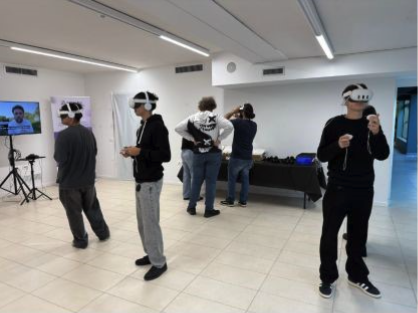
During the first iteration, Next Stage created and evaluated immersive concert experiences based on 360° video and spatial audio. Recorded material was tested with musicians and audiences and presented publicly at Internet Festival 2025 in Pisa, where different audience groups experienced the performances through VR headsets and conventional audiovisual formats. 

The pilot then moved from recorded experiences towards live immersive streaming, allowing audiences in one location to experience musicians performing live in another. This transition brought the research closer to its original question while revealing a further challenge: a satisfying remote live concert depends not only on immersion and audiovisual quality, but also on preserving the social and emotional relationships that make a performance feel live. 


– The second iteration therefore builds on the original research question by investigating how multiple viewpoints, spatial listening, social presence and real-time interaction can strengthen the connection between remote audiences and performers. Particular attention is being given to how audience reactions and feedback can reach musicians without becoming distracting, and how artists can use immersive technologies not simply to reproduce a conventional concert, but to explore new forms of musical expression. 

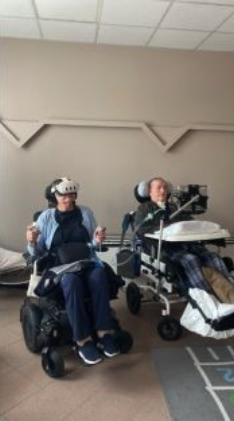
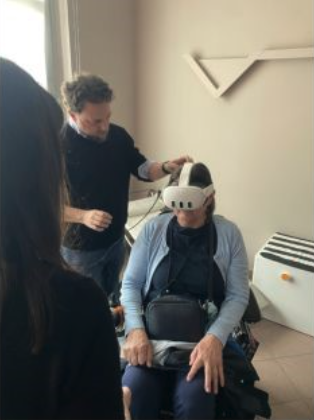
The research is also expanding towards accessibility. In collaboration with AISLA, Next Stage is exploring how immersive concert experiences and alternative interaction methods such as eye-tracking could provide meaningful access to live music for people who face severe barriers to attending concerts physically. 

At the same time, the second iteration addresses another practical question emerging from the research: whether this kind of immersive live experience can become sufficiently usable, modular and sustainable to be operated by cultural organisations themselves, rather than remaining dependent on specialist research teams. 

A short introduction to AMPLIFY and its vision for phygital solutions across the cultural and creative industries

Our goal

To develop a satisfying, accessible and transferable live immersive concert format for remote audiences, while preserving the human and social value of live music and expanding its artistic possibilities.

Next Stage aims to respond directly to the audience-centred research question. Artist empowerment, interaction, social presence, accessibility and organisational transferability are treated as connected research dimensions that help make the remote audience experience meaningful and sustainable. 

Challenges

The key challenge is not simply technological. It is to understand how immersive technology can offer remote audiences a satisfying live concert experience without losing the human qualities that make live music meaningful. 

The pilot is addressing several interconnected questions: 

  • How can performers receive meaningful feedback from a remote audience? 
  • How can audiences experience social and collective presence rather than isolated VR consumption? 
  • How can multiple viewpoints and spatial audio offer something artistically different from a conventional concert? 
  • How can latency, bandwidth and synchronisation remain manageable in a live environment? 
  • How can immersive experiences become accessible to people with different physical abilities? 
  • How can sophisticated XR technology become usable and sustainable for small and medium-sized cultural organisations? 
  • How can artists use these tools as a new creative language rather than simply reproducing existing concert formats? 

The technological solution

Next Stage is developing the pilot progressively rather than relying on a single pre-defined technological solution. 

The current core system combines live immersive video streaming and spatial audio, allowing a performance taking place in one location to be experienced remotely through XR devices. 

  • Multiple viewpoints and multicamera experiences – Audiences will be able to explore perspectives that are normally unavailable in a concert, such as close-ups of instruments, hands or performers, alongside an immersive view of the whole stage. 
  • Spatial audio  – The listening experience will respond to the position and perspective of the audience, creating a stronger relationship between what users see and what they hear. 
  • Artist–audience interaction  – The project is researching ways of transmitting audience reactions and behaviour back to musicians so that remote audiences can influence the atmosphere and potentially the development of the performance. 
  • Social presence – Rather than treating VR as an individual experience, the pilot will explore ways for remote audience members to perceive and interact with others sharing the same concert.
  • Accessibility tools – Eye-tracking and simplified interaction systems are being explored to enable users with severe mobility limitations to control the experience.
  • Modular and transferable infrastructure  – The system is being developed so that organisations such as TPM can increasingly configure, test and operate it independently, reducing dependence on specialist technical teams.


Augmented, volumetric and more abstract three-dimensional representations of performers remain possible directions for further artistic and technological exploration where they provide meaningful value to the experience. 

Toscana Produzione Musica’s mission is to promote music both through research and artistic creation, offering a fertile ground for music development.

What we have learned so far

The first iteration demonstrated that 360° video and spatial audio can create a convincing and emotionally engaging immersive concert experience. 

Testing with audiences, musicians, cultural professionals and people with ALS also showed that technological immersion alone is not enough. The next stage needs to strengthen: 

  • Interaction between performers and audiences; 
  • The social and collective dimension of the experience; 
  • Visual quality and choice of viewpoints; 
  • Accessibility; 
  • Technical stability and low latency; 
  • The ability of cultural organisations to operate the technology autonomously. 


These findings now guide the second iteration of Next Stage. 

Next Stage in action

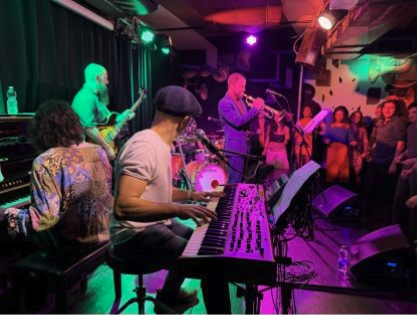
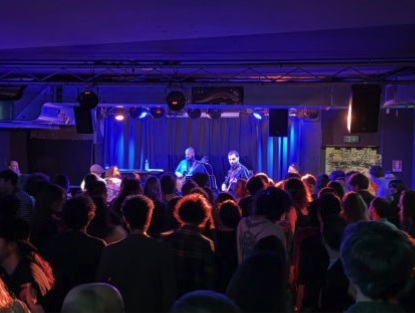
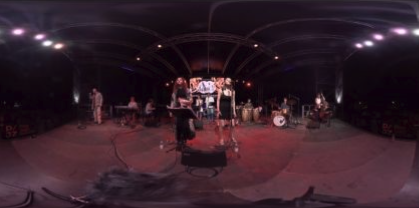
Real project activities at Internet Festival 2025, ExWide Club and with AISLA connect musicians, audiences and people with severe mobility limitations in the development and evaluation of the Next Stage experience. 

The pictures below show the Internet Festival 2025, the live performance and audience experience at ExWide Club, and Accessibility testing with AISLA.

Expected impact

Next Stage aims to expand the creative vocabulary of concerts and festivals rather than replace physical live performance. 

For audiences, immersive formats could provide access to live artistic experiences that would otherwise be unavailable because of geographical distance, physical accessibility or other barriers. They may also offer perspectives and forms of participation that are impossible in a traditional venue. 

For artists, the technology can become a new creative medium, opening possibilities for remote collaboration, new forms of interaction with audiences and artistic experimentation with space, sound and visual representation. 

For promoters and cultural organisations, remote immersive performances could make new programming models possible, connect festivals and venues in different locations, increase accessibility and reach, and reduce some of the logistical, economic and environmental constraints associated with touring. 

An essential ambition of the pilot is to demonstrate that such innovation can also be relevant to small and medium-sized cultural organisations, not only institutions with large technological and production resources. 

Next Stage will therefore contribute not only to technological development but also to understanding the artistic, organisational and economic conditions required for immersive live formats to become sustainable cultural practices. 

Planned activities

First co-design and requirements phase - 2025 

COMPLETED

Co-design activities with musicians, audiences and cultural professionals to identify the fundamental values and requirements of an immersive remote concert experience. 

First immersive prototype and recording - 2025 

COMPLETED

Production and testing of immersive concert content using 360° video and spatial audio, including recordings in real live-music environments. 

Internet Festival 2025 - October 2025 

COMPLETED 

Public presentation and evaluation of the first immersive prototype with different audience groups, including young people and adults, using VR headsets and audiovisual installations. The results provided important feedback on immersion, presence, usability, sound, visual quality and expectations for future live interaction. 

From recorded content to live immersive streaming - 2025/2026 

COMPLETED / ONGOING DEVELOPMENT 

Development and technical testing of the first live version of Next Stage, connecting a live performance with audiences in another location through immersive video and spatial audio. The core setup has also been transferred to TPM to increase its ability to configure and test the technology independently. 

Professional and accessibility evaluation - 2026 

ONGOING 

Testing and discussion with musicians, cultural professionals and external organisations to assess the artistic value, accessibility and potential adoption of the experience. Activities include collaboration with AISLA to explore how immersive concerts could be experienced by people with severe mobility limitations. 

Second-iteration co-design - Autumn 2026 

PLANNED 

New interviews and co-design sessions with musicians, audiences and technical stakeholders will explore artist–audience interaction, audience feedback, multiple camera perspectives, social presence, accessibility and possible new artistic representations of remote performers. 

Internet Festival 2026 - October 2026 

PLANNED, SUBJECT TO TECHNICAL READINESS AND FINAL PROGRAMME CONFIGURATION 

Internet Festival 2026 provides an opportunity to present and test elements of the evolving live AMPLIFY IMMERSIVE experience with a public audience. The exact format will depend on the maturity of the prototype and the outcomes of the technical preparation. The objective is to use the festival as a real-world testing and engagement opportunity rather than requiring every component of the final Next Stage experience to be completed at this stage.

Live prototype testing in Pisa - Autumn 2026 

PLANNED 

A concentrated series of technical, artistic and user-testing activities in Pisa will test the second-generation system. Activities are expected to include autonomous operation of the core live-streaming setup by TPM; testing with different numbers and types of receiving devices; multicamera and multiple-viewpoint experiences; co-design and testing of audience interaction; and accessibility testing using eye-tracking. These activities will provide the basis for subsequent real-world validation. 

Real-world testing at different scales - 2026/2027 

PLANNED 

The evolving Next Stage experience will be tested with musicians and audiences in different live-music environments in Pisa, ranging from smaller club settings to larger venues and festival contexts. These activities will evaluate technical stability, usability, audience experience, interaction, accessibility and artistic potential under increasingly realistic conditions. 

Accessibility testing with AISLA - 2026/2027 

PLANNED 

Further sessions with AISLA will evaluate eye-tracking and other simplified interaction methods, exploring how people with severe mobility limitations can independently navigate and participate in immersive live music experiences. The findings will contribute to the wider accessibility principles of AMPLIFY IMMERSIVE. 

Dissemination and adoption activities - 2026/2027 

ONGOING 

Next Stage results will be shared with musicians, promoters, festivals and other Cultural and Creative Industry professionals through fairs, conferences, workshops, demonstrations and AMPLIFY adoption activities. The pilot will also investigate how the system can be transferred to organisations with limited technical resources. 

Final real-world validation and evaluation - 2027 

PLANNED 

The final phase will evaluate the revised Next Stage format with artists and audiences in real-world conditions and assess its artistic value, accessibility, usability, organisational feasibility and potential for wider adoption. 

Internet Festival 2027 - October 2027 

FINAL PRESENTATION 

Presentation of the final Next Stage outcomes, lessons learned and future possibilities for immersive and phygital live music experiences. 

Subscribe to our newsletter

Newsletter / Subscription ( Popup )

Your information will be used to send you the AMPLIFY project Newsletter, managed by the AMPLIFY consortium. Please tick the box to confirm that you understand and would like to receive the newsletter.

You can unsubscribe at any time by clicking the link in the footer of our emails. By subscribing, you acknowledge that your information will be transferred to Mailchimp for processing. Learn about Mailchimp’s legal policies.